


Details
Product Details
- Section:
- Children and Young People
- Speaker:
- Susan Hamre, MA, CCC-SLP
- Duration:
- Full Day
- Media Type:
- Digital Recordings
CPD
Additional Info
Program Information
Access for Self-Study (Non-Interactive)Access never expires for this product.
Target Audience
Counselors, Teachers/Educators, Marriage & Family Therapists, Nurses, Occupational Therapists & Occupational Therapy Assistants, Physical Therapists/Physical Therapist Assistants, Psychologists, Social Workers, Speech-Language Pathologists, and other Mental Health ProfessionalsObjectives
-
Explain how early forms of communication, sensory, social-emotional and physical development can affect overall cognitive development.
-
Utilize strategies to strengthen communication, sensory processing and joint attention deficits that impact social-emotional development.
-
Develop treatment plans that impact the development of social-emotional skills.
-
Design treatment techniques that can be used in the home, school and clinic environments.
-
Employ strategies to develop social reciprocity, self-regulation, attention and overall focusing skills.
-
Determine the family support systems that will ensure realistic and long-lasting plans for the child.
Outline
Linking Disorders to Social-Emotional Development
-
Developmental delays
-
Cognitive delays
-
Autism Spectrum Disorder
-
Social (Pragmatic) Communication Disorder
-
Sensory Integration/Processing Disorder
-
Behavioral disorders
-
Attachment disorders
Foundations for Treatment
-
Current brain research: What is critical in overall development?
-
How social-emotional and cognitive development are intertwined
-
6 core features of solid social-emotional health
Screening and Evaluation Tools
-
Early signs of ‘at risk’ social-emotional development
-
Measurement of cognitive functions
-
Pre-linguistic communication
-
Expressive and receptive communication
-
Early and subtle signs of autism
-
Sensory seeking and/or avoiding behaviors
-
Fine and gross motor development
Communication Strategies
-
Interventions to develop receptive skills/ language comprehension
-
Scripts and first person stories to develop creative language
-
Communication cards, choice boards and Apps as visual supports
-
“High-tech” communication devices
-
Social stories to break down daily activities
Sensory Integration/Processing Strategies
-
Sensory diets that can be easily integrated throughout daily routines
-
Sensory breaks that promote focus and self-regulation
-
Teach child how to self-advocate
Self-Regulation Strategies
-
Teach child to identify, express and label their feelings
-
Use high focus/interests as incentives to change behavior
-
Techniques to teach self-calm and self-control
-
Guided imagery and visualization for relaxation
-
Manage behavior and emotions
Joint Attention Strategies
-
Develop a relationship based on joint interest
-
Create a need to access interest
-
Generate motivation
-
Video modeling
Environmental Strategies
-
Create a ‘calm’ atmosphere
-
Visual supports for organization
-
Reduce stimulation and peer-to-peer conflict
-
Appropriate vs. inappropriate use of technology
Individualized Treatment Plan: Hands-on Activity
-
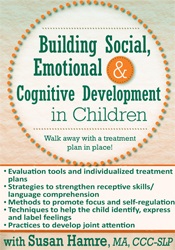
Walk away with a treatment plan in place!
Please wait ...